

Sort by

Sold Out
Yoshikane (Hatsukokoro) SKD Nashiji Nakiri 165mm - Ebony

Sold Out
Yoshikane (Hatsukokoro) SKD Nashiji Stainless Clad Nakiri 165mm - Bubinga

Sold Out
Yoshikane SKD Nashiji Nakiri 165mm

Sold Out
Yoshikane SKD Tsuchime Nakiri 165mm
★★★★★
★★★★★
(1)

Sold Out
Yoshimi Kato "Minamo" SG2 Nakiri 165mm

Sold Out
Yoshimi Kato SG Strix V-Tsuchime Nakiri

Sold Out
Yoshimi Kato SG Strix V-Tsuchime Nakiri - Dark Maple
Sold Out
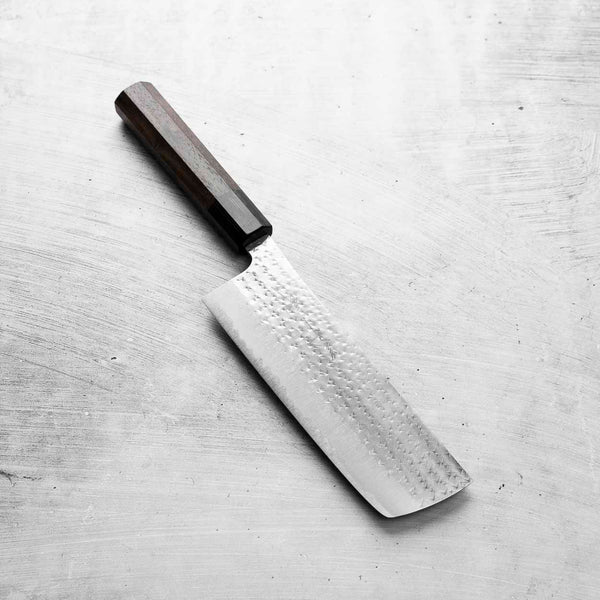
Yu Kurosaki AS Kokusen Ei Nakiri 165mm - Rosewood
★★★★★
★★★★★
(2)

Sold Out
Yu Kurosaki SG2 Senko Nakiri 165mm - Dark Maple
★★★★★
★★★★★
(1)

Sold Out
Yu Kurosaki Shizuku SG2 Nakiri 165mm
Showing 97–106 of 106 products
Filter & Sort
Sort By

◆ Common Questions
Shopping for Japanese Nakiri Knives
What is a nakiri knife used for?
Nakiri knives are Japanese vegetable knives with a straight, rectangular blade designed for clean push-cuts through produce. The flat edge means every slice makes full contact with the cutting board, no rocking motion needed. Ideal for herbs, root vegetables, cabbage, and anything you'd julienne or chop in volume.
What size nakiri should I buy?
165mm is the most popular size, big enough for large vegetables and nimble enough for small boards. 180mm suits larger hands or heavy prep. 150mm works well for smaller kitchens or lighter cutting.
Nakiri vs santoku: which is better?
Nakiri is purpose-built for vegetables with a flat blade for push-cuts. Santoku is a general-purpose chef knife with a slightly curved edge, better if you want one knife for everything. If you prep lots of vegetables, nakiri. If you want one all-rounder, santoku.
Are nakiri knives dishwasher safe?
No. Japanese knives should never go in the dishwasher. Hand wash with warm water and dry immediately. Carbon steel nakiri should be wiped dry after each use and oiled occasionally to prevent rust. Stainless steel is more forgiving but still hand-wash only.
Can a nakiri cut meat?
What's the difference between nakiri and usuba?
Both are Japanese vegetable knives, but nakiri is double-bevel (ground on both sides, easier to use) and usuba is single-bevel (traditional, requires skill). Nakiri suits home cooks and most professional kitchens; usuba is reserved for traditional Japanese cuisine specialists.