Sort by:
310 products
310 products
Knife Information
These handmade Japanese micro scissors were originally designed many years ago for use as thread scissors, however they are widely used in commercial kitchen environments as herb scissors.
Specifications
| Style: | Thread Scissor |
| Blade Length: | 125mm |
| Weight: | 30g |
| Blade Material: | Carbon Steel |
Accessories Information
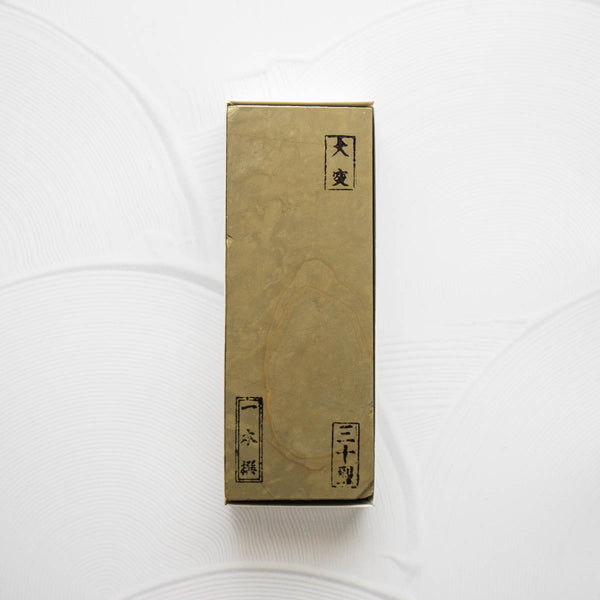
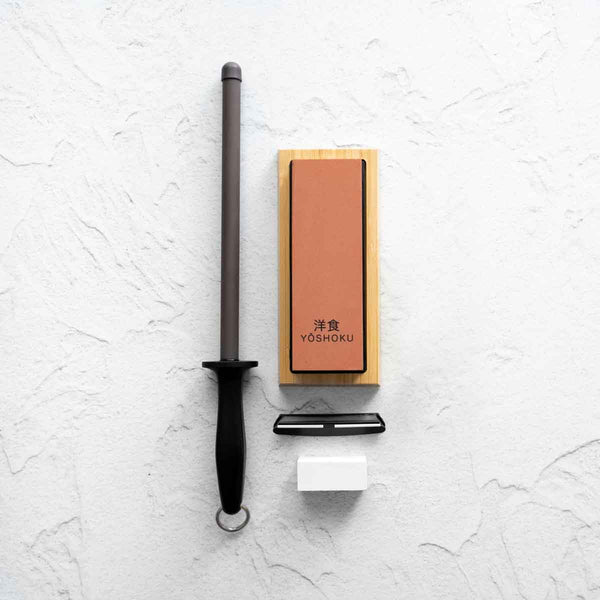
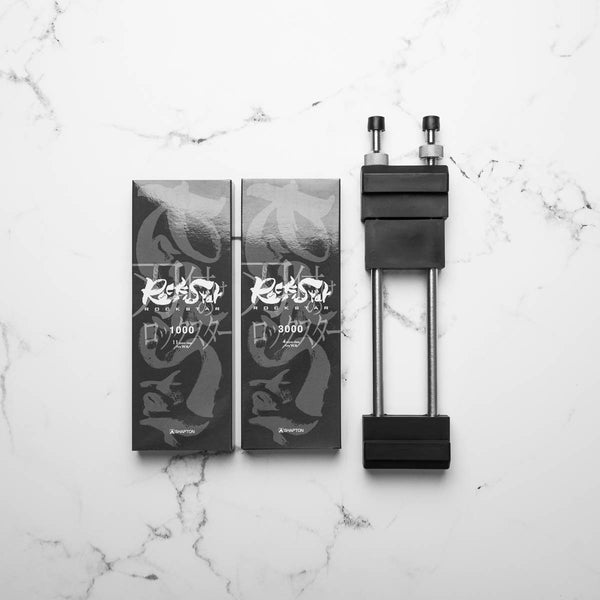
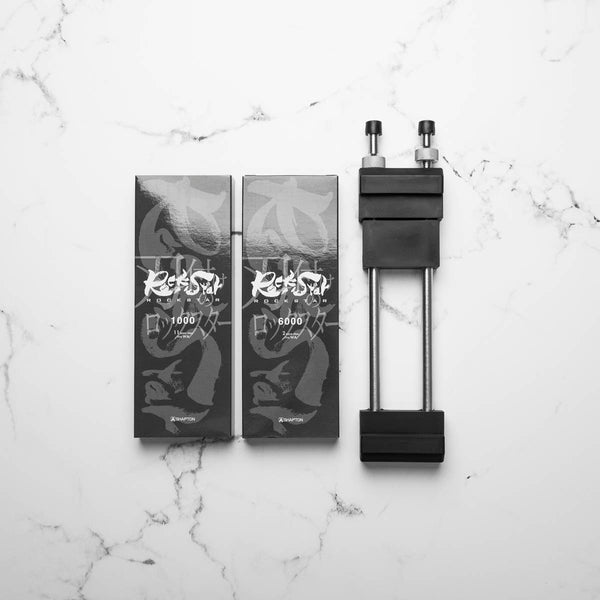
A synthetic marvel made by Morihei Japan, the Hishiboshi whetstones feel like natural stones, require no soaking, are extremely long lasting and offer excellent tactile feedback.
Accessories Information
This 1000/4000 kit is the perfect maintenance bundle for keeping both carbon and stainless knives in top condition. A synthetic marvel made by Morihei Japan, the Hishiboshi whetstones feel like natural stones, require no soaking, are extremely long lasting and offer excellent tactile feedback.
- Size: 210 x 75 x 26mm
- 840g
Accessories Information
A synthetic marvel made by Morihei Japan, the Hishiboshi whetstones feel like natural stones, require no soaking, are extremely long lasting and offer excellent tactile feedback.
Accessories Information
This 500/1000/4000 kit is the perfect bundle to move more stubborn steels like SG2 or HAP40, or for minor chip repairs, as well as for keeping both carbon and stainless knives in top condition. A synthetic marvel made by Morihei Japan, the Hishiboshi whetstones feel like natural stones, require no soaking, are extremely long lasting and offer excellent tactile feedback.
- Size: 210 x 75 x 26mm
- 840g
Accessories Information
This 500/1000/4000/6000 kit is the perfect bundle to move more stubborn steels like SG2 or HAP40, or for minor chip repairs, as well as for taking carbon and stainless edges to a more refined 6000 finish. A synthetic marvel made by Morihei Japan, the Hishiboshi whetstones feel like natural stones, require no soaking, are extremely long lasting and offer excellent tactile feedback.
- Size: 210 x 75 x 26mm
- 840g
Accessories Information
A synthetic marvel made by Morihei Japan, the Hishiboshi whetstones feel like natural stones, require no soaking, are extremely long lasting and offer excellent tactile feedback.
Knife Information
A traditional Japanese tool for woodworking and leather crafting. It has a single bevel edge much like Japanese sushi knives, meaning it can be sharpened to have an extremely sharp edge.
Brand: Morihei
Profile: Kiridashi
Steel Type: Blue #1 (Aogami)
Total Length: 221mm
Blade Length: 64mm
Bevel Symmetry: Single Bevel
Hand Orientation: Right Handed
Weight: 128g
Knife Information
A traditional Japanese tool for woodworking and leather crafting. It has a single bevel edge much like Japanese sushi knives, meaning it can be sharpened to have an extremely sharp edge.
Brand: Morihei
Profile: Kiridashi
Steel Type: Blue #1 (Aogami)
Total Length: 201mm
Blade Length: 45mm
Bevel Symmetry: Single Bevel
Hand Orientation: Right Handed
Weight: 35g
Knife Information
A traditional Japanese tool for woodworking and leather crafting. It has a single bevel edge much like Japanese sushi knives, meaning it can be sharpened to have an extremely sharp edge.
Brand: Morihei
Profile: Kiridashi
Steel Type: Blue #1 (Aogami)
Total Length: 197mm
Blade Length: 54mm
Bevel Symmetry: Single Bevel
Hand Orientation: Right Handed
Weight: 71g
Knife Information
1894- Mr. Tasaburo Shigematsu, a hardware wholesaler, introduced a new pocket knife with its blade and sheath folded by installing a small handle “Chikiri (tail)” on the blade, while inspired by the knife he brought back from Kagoshima.
He named it “Higonokami Knife” because many of his customers were in Kumamoto area (formally Higo country), which turned out to dramatically increase his sales. The blades have gradually changed their shapes. Unlike single-edged knives, the double-edged blades (V-shaped cross section) were in those days considered common. The earlier blades had a sharper tip (shape of a bamboo leaf), but now they have square shapes. The sheaths had a vertically folding style and a cross folding style, now the vertical one has to be custom made.
In 1911, at the First Kobe Export Articles Competitive Exhibition, Crown Prince (later Emperor Taisho) liked Higonokami on display very much and bought one, which is said to have helped its fame further spread.
The Higonikami is a fantastic traditional utility knife at a low cost.
Specifications
| Style: | Higonokami |
| Blade Length: | 70mm |
| Weight: | 45g |
| Bevel: | Double Bevel |
| Blade Material: |
Aogami 2 |
| Handle Material: | Stainless Steel |
Knife Information
1894- Mr. Tasaburo Shigematsu, a hardware wholesaler, introduced a new pocket knife with its blade and sheath folded by installing a small handle “Chikiri (tail)” on the blade, while inspired by the knife he brought back from Kagoshima.
He named it “Higonokami Knife” because many of his customers were in Kumamoto area (formally Higo country), which turned out to dramatically increase his sales. The blades have gradually changed their shapes. Unlike single-edged knives, the double-edged blades (V-shaped cross section) were in those days considered common. The earlier blades had a sharper tip (shape of a bamboo leaf), but now they have square shapes. The sheaths had a vertically folding style and a cross folding style, now the vertical one has to be custom made.
In 1911, at the First Kobe Export Articles Competitive Exhibition, Crown Prince (later Emperor Taisho) liked Higonokami on display very much and bought one, which is said to have helped its fame further spread.
The Higonikami is a fantastic traditional utility knife at a low cost.
Specifications
| Style: | Higonokami |
| Blade Length: | 70mm |
| Weight: | 43g |
| Bevel: | Double Bevel |
| Blade Material: |
Aogami 2 |
| Handle Material: | Stainless Steel |
Knife Information
1894- Mr. Tasaburo Shigematsu, a hardware wholesaler, introduced a new pocket knife with its blade and sheath folded by installing a small handle “Chikiri (tail)” on the blade, while inspired by the knife he brought back from Kagoshima.
He named it “Higonokami Knife” because many of his customers were in Kumamoto area (formally Higo country), which turned out to dramatically increase his sales. The blades have gradually changed their shapes. Unlike single-edged knives, the double-edged blades (V-shaped cross section) were in those days considered common. The earlier blades had a sharper tip (shape of a bamboo leaf), but now they have square shapes. The sheaths had a vertically folding style and a cross folding style, now the vertical one has to be custom made.
In 1911, at the First Kobe Export Articles Competitive Exhibition, Crown Prince (later Emperor Taisho) liked Higonokami on display very much and bought one, which is said to have helped its fame further spread.
The Higonikami is a fantastic traditional utility knife at a low cost.
Specifications
| Style: | Higonokami |
| Blade Length: | 70mm |
| Weight: | 49g |
| Bevel: | Double Bevel |
| Blade Material: | Aogami (Blue) Steel w/Kurouchi Finish |
| Handle Material: | Brass |
Knife Information
1894- Mr. Tasaburo Shigematsu, a hardware wholesaler, introduced a new pocket knife with its blade and sheath folded by installing a small handle “Chikiri (tail)” on the blade, while inspired by the knife he brought back from Kagoshima.
He named it “Higonokami Knife” because many of his customers were in Kumamoto area (formally Higo country), which turned out to dramatically increase his sales. The blades have gradually changed their shapes. Unlike single-edged knives, the double-edged blades (V-shaped cross section) were in those days considered common. The earlier blades had a sharper tip (shape of a bamboo leaf), but now they have square shapes. The sheaths had a vertically folding style and a cross folding style, now the vertical one has to be custom made.
In 1911, at the First Kobe Export Articles Competitive Exhibition, Crown Prince (later Emperor Taisho) liked Higonokami on display very much and bought one, which is said to have helped its fame further spread.
The Higonikami is a fantastic traditional utility knife at a low cost.
Specifications
| Style: | Higonokami |
| Blade Length: | 50mm |
| Weight: | 35g |
| Bevel: | Double Bevel |
| Blade Material: | Aogami (Blue) Steel |
| Handle Material: | Brass |
Knife Information
1894- Mr. Tasaburo Shigematsu, a hardware wholesaler, introduced a new pocket knife with its blade and sheath folded by installing a small handle “Chikiri (tail)” on the blade, while inspired by the knife he brought back from Kagoshima.
He named it “Higonokami Knife” because many of his customers were in Kumamoto area (formally Higo country), which turned out to dramatically increase his sales. The blades have gradually changed their shapes. Unlike single-edged knives, the double-edged blades (V-shaped cross section) were in those days considered common. The earlier blades had a sharper tip (shape of a bamboo leaf), but now they have square shapes. The sheaths had a vertically folding style and a cross folding style, now the vertical one has to be custom made.
In 1911, at the First Kobe Export Articles Competitive Exhibition, Crown Prince (later Emperor Taisho) liked Higonokami on display very much and bought one, which is said to have helped its fame further spread.
The Higonikami is a fantastic traditional utility knife at a low cost.
Specifications
| Style: | Higonokami |
| Blade Length: | 70mm |
| Weight: | 39g |
| Bevel: | Double Bevel |
| Blade Material: | Engraved Aogami w/Ceramic Coat |
| Handle Material: | GlossBlack Casing |
Knife Information
1894- Mr. Tasaburo Shigematsu, a hardware wholesaler, introduced a new pocket knife with its blade and sheath folded by installing a small handle “Chikiri (tail)” on the blade, while inspired by the knife he brought back from Kagoshima.
He named it “Higonokami Knife” because many of his customers were in Kumamoto area (formally Higo country), which turned out to dramatically increase his sales. The blades have gradually changed their shapes. Unlike single-edged knives, the double-edged blades (V-shaped cross section) were in those days considered common. The earlier blades had a sharper tip (shape of a bamboo leaf), but now they have square shapes. The sheaths had a vertically folding style and a cross folding style, now the vertical one has to be custom made.
In 1911, at the First Kobe Export Articles Competitive Exhibition, Crown Prince (later Emperor Taisho) liked Higonokami on display very much and bought one, which is said to have helped its fame further spread.
The Higonikami is a fantastic traditional utility knife at a low cost.
Specifications
| Style: | Higonokami |
| Blade Length: | 70mm |
| Weight: | 50g |
| Bevel: | Double Bevel |
| Blade Material: | Aogami (Blue) Steel |
| Handle Material: | Engraved Brass w/hand-polished Black coating |
Knife Information
1894- Mr. Tasaburo Shigematsu, a hardware wholesaler, introduced a new pocket knife with its blade and sheath folded by installing a small handle “Chikiri (tail)” on the blade, while inspired by the knife he brought back from Kagoshima.
He named it “Higonokami Knife” because many of his customers were in Kumamoto area (formally Higo country), which turned out to dramatically increase his sales. The blades have gradually changed their shapes. Unlike single-edged knives, the double-edged blades (V-shaped cross section) were in those days considered common. The earlier blades had a sharper tip (shape of a bamboo leaf), but now they have square shapes. The sheaths had a vertically folding style and a cross folding style, now the vertical one has to be custom made.
In 1911, at the First Kobe Export Articles Competitive Exhibition, Crown Prince (later Emperor Taisho) liked Higonokami on display very much and bought one, which is said to have helped its fame further spread.
The Higonikami is a fantastic traditional utility knife at a low cost.
Specifications
| Style: | Higonokami |
| Blade Length: | 70mm |
| Weight: | 49g |
| Bevel: | Double Bevel |
| Blade Material: | Blue 2, Iron Clad |
| Handle Material: | Brass |
Knife Information
1894- Mr. Tasaburo Shigematsu, a hardware wholesaler, introduced a new pocket knife with its blade and sheath folded by installing a small handle “Chikiri (tail)” on the blade, while inspired by the knife he brought back from Kagoshima.
He named it “Higonokami Knife” because many of his customers were in Kumamoto area (formally Higo country), which turned out to dramatically increase his sales. The blades have gradually changed their shapes. Unlike single-edged knives, the double-edged blades (V-shaped cross section) were in those days considered common. The earlier blades had a sharper tip (shape of a bamboo leaf), but now they have square shapes. The sheaths had a vertically folding style and a cross folding style, now the vertical one has to be custom made.
In 1911, at the First Kobe Export Articles Competitive Exhibition, Crown Prince (later Emperor Taisho) liked Higonokami on display very much and bought one, which is said to have helped its fame further spread.
The Higonikami is a fantastic traditional utility knife at a low cost.
Specifications
| Style: | Higonokami |
| Blade Length: | 92mm |
| Weight: | 70g |
| Bevel: | Double Bevel |
| Blade Material: | Laminated SK Carbon Steel |
| Handle Material: | Black Nickel |
Knife Information
1894- Mr. Tasaburo Shigematsu, a hardware wholesaler, introduced a new pocket knife with its blade and sheath folded by installing a small handle “Chikiri (tail)” on the blade, while inspired by the knife he brought back from Kagoshima.
He named it “Higonokami Knife” because many of his customers were in Kumamoto area (formally Higo country), which turned out to dramatically increase his sales. The blades have gradually changed their shapes. Unlike single-edged knives, the double-edged blades (V-shaped cross section) were in those days considered common. The earlier blades had a sharper tip (shape of a bamboo leaf), but now they have square shapes. The sheaths had a vertically folding style and a cross folding style, now the vertical one has to be custom made.
In 1911, at the First Kobe Export Articles Competitive Exhibition, Crown Prince (later Emperor Taisho) liked Higonokami on display very much and bought one, which is said to have helped its fame further spread.
The Higonikami is a fantastic traditional utility knife at a low cost.
Specifications
| Style: | Higonokami |
| Blade Length: | 74mm |
| Weight: | 53g |
| Bevel: | Double Bevel |
| Blade Material: | Laminated SK Carbon Steel |
| Handle Material: | Black Nickel |
Knife Information
1894- Mr. Tasaburo Shigematsu, a hardware wholesaler, introduced a new pocket knife with its blade and sheath folded by installing a small handle “Chikiri (tail)” on the blade, while inspired by the knife he brought back from Kagoshima.
He named it “Higonokami Knife” because many of his customers were in Kumamoto area (formally Higo country), which turned out to dramatically increase his sales. The blades have gradually changed their shapes. Unlike single-edged knives, the double-edged blades (V-shaped cross section) were in those days considered common. The earlier blades had a sharper tip (shape of a bamboo leaf), but now they have square shapes. The sheaths had a vertically folding style and a cross folding style, now the vertical one has to be custom made.
In 1911, at the First Kobe Export Articles Competitive Exhibition, Crown Prince (later Emperor Taisho) liked Higonokami on display very much and bought one, which is said to have helped its fame further spread.
The Higonikami is a fantastic traditional utility knife at a low cost.
Specifications
| Style: | Higonokami |
| Blade Length: | 65mm |
| Weight: | 33g |
| Bevel: | Double Bevel |
| Blade Material: | Laminated SK Carbon Steel |
| Handle Material: | Black Nickel |
Knife Information
1894- Mr. Tasaburo Shigematsu, a hardware wholesaler, introduced a new pocket knife with its blade and sheath folded by installing a small handle “Chikiri (tail)” on the blade, while inspired by the knife he brought back from Kagoshima.
He named it “Higonokami Knife” because many of his customers were in Kumamoto area (formally Higo country), which turned out to dramatically increase his sales. The blades have gradually changed their shapes. Unlike single-edged knives, the double-edged blades (V-shaped cross section) were in those days considered common. The earlier blades had a sharper tip (shape of a bamboo leaf), but now they have square shapes. The sheaths had a vertically folding style and a cross folding style, now the vertical one has to be custom made.
In 1911, at the First Kobe Export Articles Competitive Exhibition, Crown Prince (later Emperor Taisho) liked Higonokami on display very much and bought one, which is said to have helped its fame further spread.
The Higonikami is a fantastic traditional utility knife at a low cost.
Specifications
| Style: | Higonokami |
| Blade Length: | 65mm |
| Casing Length: | 90mm |
| Casing Width: | 15mm |
| Weight: | 33g |
| Bevel: | Double Bevel |
| Blade Material: | Laminated SK Carbon Steel Nashiji Finish |
| Handle Material: | Black Steel |
Knife Information
1894- Mr. Tasaburo Shigematsu, a hardware wholesaler, introduced a new pocket knife with its blade and sheath folded by installing a small handle “Chikiri (tail)” on the blade, while inspired by the knife he brought back from Kagoshima.
He named it “Higonokami Knife” because many of his customers were in Kumamoto area (formally Higo country), which turned out to dramatically increase his sales. The blades have gradually changed their shapes. Unlike single-edged knives, the double-edged blades (V-shaped cross section) were in those days considered common. The earlier blades had a sharper tip (shape of a bamboo leaf), but now they have square shapes. The sheaths had a vertically folding style and a cross folding style, now the vertical one has to be custom made.
In 1911, at the First Kobe Export Articles Competitive Exhibition, Crown Prince (later Emperor Taisho) liked Higonokami on display very much and bought one, which is said to have helped its fame further spread.
The Higonikami is a fantastic traditional utility knife at a low cost.
Specifications
| Style: | Higonokami |
| Blade Length: | 65mm |
| Weight: | 33g |
| Bevel: | Double Bevel |
| Blade Material: | Laminated SK Carbon Steel |
| Handle Material: | Semi-Polished Steel |
Knife Information
1894- Mr. Tasaburo Shigematsu, a hardware wholesaler, introduced a new pocket knife with its blade and sheath folded by installing a small handle “Chikiri (tail)” on the blade, while inspired by the knife he brought back from Kagoshima.
He named it “Higonokami Knife” because many of his customers were in Kumamoto area (formally Higo country), which turned out to dramatically increase his sales. The blades have gradually changed their shapes. Unlike single-edged knives, the double-edged blades (V-shaped cross section) were in those days considered common. The earlier blades had a sharper tip (shape of a bamboo leaf), but now they have square shapes. The sheaths had a vertically folding style and a cross folding style, now the vertical one has to be custom made.
In 1911, at the First Kobe Export Articles Competitive Exhibition, Crown Prince (later Emperor Taisho) liked Higonokami on display very much and bought one, which is said to have helped its fame further spread.
The Higonikami is a fantastic traditional utility knife at a low cost.
Specifications
| Style: | Higonokami |
| Blace Length: | 75mm |
| Weight: | 45g |
| Bevel: | Double Bevel |
| Blade Material: | Shirogami Steel (non stainless & reactive) |
| Handle Material: | Brass |
Nagao Kanekoma Higonokami VG10 Custom - Black Persimmon- No 50
Knife Information
1894- Mr. Tasaburo Shigematsu, a hardware wholesaler, introduced a new pocket knife with its blade and sheath folded by installing a small handle “Chikiri (tail)” on the blade, while inspired by the knife he brought back from Kagoshima.
He named it “Higonokami Knife” because many of his customers were in Kumamoto area (formally Higo country), which turned out to dramatically increase his sales. The blades have gradually changed their shapes. Unlike single-edged knives, the double-edged blades (V-shaped cross section) were in those days considered common. The earlier blades had a sharper tip (shape of a bamboo leaf), but now they have square shapes. The sheaths had a vertically folding style and a cross folding style, now the vertical one has to be custom made.
In 1911, at the First Kobe Export Articles Competitive Exhibition, Crown Prince (later Emperor Taisho) liked Higonokami on display very much and bought one, which is said to have helped its fame further spread.
The Higonikami is a fantastic traditional utility knife at a low cost.
Specifications
| Style: | Higonokami |
| Blade Length: | 70mm |
| Weight: | 32g |
| Bevel: | Double Bevel |
| Blade Material: | VG10 Stainless Steel |
| Handle Material: | Custom Engraved Black Persimmon |
Knife Information
1894- Mr. Tasaburo Shigematsu, a hardware wholesaler, introduced a new pocket knife with its blade and sheath folded by installing a small handle “Chikiri (tail)” on the blade, while inspired by the knife he brought back from Kagoshima.
He named it “Higonokami Knife” because many of his customers were in Kumamoto area (formally Higo country), which turned out to dramatically increase his sales. The blades have gradually changed their shapes. Unlike single-edged knives, the double-edged blades (V-shaped cross section) were in those days considered common. The earlier blades had a sharper tip (shape of a bamboo leaf), but now they have square shapes. The sheaths had a vertically folding style and a cross folding style, now the vertical one has to be custom made.
In 1911, at the First Kobe Export Articles Competitive Exhibition, Crown Prince (later Emperor Taisho) liked Higonokami on display very much and bought one, which is said to have helped its fame further spread.
The Higonikami is a fantastic traditional utility knife at a low cost.
Specifications
| Style: | Higonokami |
| Blade Length: | 70mm |
| Weight: | 32g |
| Bevel: | Double Bevel |
| Blade Material: | VG10 Stainless Steel |
| Handle Material: | Custom Engraved Ebony |
Chef's Edge
We pride ourselves on offering an unparalleled selection of Japanese knives. From the versatile Gyuto and the precise Santoku to specialized knives like the Nakiri and Yanagiba, each knife is handpicked for its quality and performance.